
Will Artificial Intelligence Replace Humans in the Workforce? What Is the Truth?
In looking at recent decades, the article considers the concerning trend of companies using advanced automation and artificial intelligence to reduce jobs and cut costs. It presents a crucial decision for the future: using technology to either replace or augment workers. The article grapples with the question of whether AI will primarily be a force for automation or augmentation in its evolution, highlighting the difficulty of estimating job creation in the face of technological advancement.
Furthermore, the advancement and application of AI technology are not occurring in a vacuum. New sectors and employment opportunities may arise as AI develops. For instance, new positions in data science and machine learning have already been created as a result of the expansion of the AI sector. Any possible job losses will probably be mitigated by the creation of even more work opportunities as AI develops.
Ultimately, the article leads us into a world where AI companies, now wielding unprecedented wealth and power, must take responsibility. It urges a shift away from the idea of an unavoidable jobless future and advocates for a thoughtful approach.
Will AI Take Our Jobs?
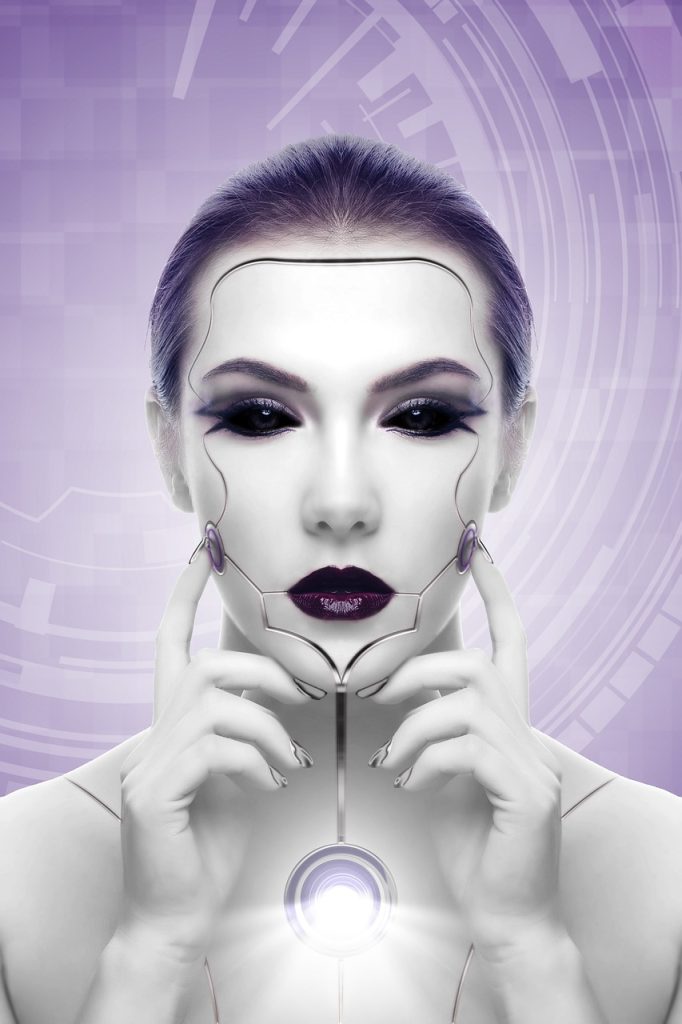
Given how quickly AI is evolving, it makes sense that many people are worried about the possibility of job losses. The ramifications are substantial when you give it some thought. Jobs with a lot of repetitive and process-driven duties have already been influenced by AI. AI has the potential to replace jobs like programmers, graphic designers, translators, and advertising copywriters.
There are differing opinions on the complicated issue of whether AI will replace humans in the workforce. To put it briefly, artificial intelligence (AI) has the ability to automate some operations, perhaps replacing some professions, but it also creates new sectors and opportunities.
Here are some important things to think about:
1. Automation of Repetitive Tasks
AI is very good at automating tasks that follow rules and are repetitive. Automation may threaten jobs in industries including manufacturing, data entry, and customer service. AI can expedite administrative work, while chatbots and virtual assistants can respond to customer support concerns.
2. AI as a Tool for Human Workers
AI is frequently utilized to increase human productivity rather than to replace workers. AI can help clinicians in domains like healthcare by evaluating medical pictures, making treatment recommendations, or forecasting patient outcomes, but human judgment is still needed to conclude. Thus, AI has the potential to be a tool that improves worker productivity.
3. New Industries and Jobs
AI may replace certain jobs, but it also generates new ones. These could be in fields like data science, machine learning, AI development, or previously undefined positions like human-AI interaction designers or AI ethicists. AI is also creating new industries and solutions that have the potential to boost the economy and generate new job opportunities.
4. Job Transformation
A lot of jobs might change rather than go away. Healthcare professionals, for example, could have to get used to working with AI technologies more frequently, while employees in industries like transportation might need to adjust to autonomous vehicles. Workers may need to learn new skills in order to adapt.
5. The Role of Education and Policy
Businesses, governments, and educational institutions all have an impact on how AI affects employment. The smoothness of the transition will depend on policies about workforce adaptation, reskilling, and upskilling. Programs for education and training investments will facilitate employees’ transition into new positions.
In summary, the overall impact on employment will be significantly influenced by how society reacts to this shift through policy, education, and industry collaboration. In conclusion, AI has the potential to both create and displace jobs. While some jobs may be automated, many others will change, and new opportunities will arise.
